Top 10 Custom Software Development Project Management Tools In 2021

Top 10 Custom Software Development Project Management Tools  

As it said good project management leaves the successful project and proper project management  your going to deliver the best projects a small scale project is pretty simple to manage, but things become challenging when more people get involved in project management now this is where project management tools come into the rescue and today Aezion is discussing top10 management tools that are preferred by project managers worldwide so projects, as we all know, are the temporary endeavors which are undertaken in order to create a unique solution to a problem now project management ensures a smooth flow of development of these projects starting from its conception till its delivery, in other words, it is a practice of initiating planning executing controlling and closing the work of a team to achieve specific goals and meet specific success criteria at the specified time for easy and systematic project management nowadays project management tools are being heavily used in the market irrespective of the size or the type of the project. These tools act as an aid to an individual as well as a team. Here we are discussing the top 10 project custom software management tools.

Custom Software Development Project Management Tools

Custom Software Development Project Management Tools  

1. Micro Software Project

As the name suggests its project portfolio management tool provided by Microsoft, provides cloud-based and on-premise options it also provides the integrated planning tools which help in organizing and keeping a tab of projects including daily tasks and overall directions to this too to comprise of three main modules. The first module is the project management module second one is portfolio management and the third is resource management. It is considered to be the best project management tool, which is extremely intuitive and offers a great balance of usability and complexity fee offered striking features including easy integration with various offers full visibility of project processes and tasks and built-in templates etc.

2. Scoro

Scoro is a comprehensive solution that integrates all the features that are needed in any project management software using scoro you can entire company in one place. That is it unifies your disparate systems, countless spreadsheets into one single tool. It is basically software as a service solution for professionals and creative services few of its intriguing features include collaboration,  productivity project management sale force automation as well as CRM.

3. Freed Camp

Freed camp is a web-based project management tool an organization system that can be used by single or multiple users who are collaborating using cloud computing it is an ideal tool for these people and businesses who want to stay in control of their project resources, budget, and time. It provides exceptional features like signing tasks to team members scheduling events via calendar discussion boards time tracking. it will help you in improving your workflow determine your targets and achieving your goals within the specified time and budget.

4. Podio


Podio is a cloud-based collection service which is powered by Citrix. It is the social collaboration tool where one can build applications and set up workspaces to support the preferred workflow and become more effective. It is a perfect tool for enhancing collaboration as it lets connect with colleagues via an internal social network and chap. Few are the features of Podio include granular access personal dashboards connected to CRM data visualizations third-party app integration and full customization of your whole toolbar. 

5. ZOHO

Zoho is a free online project management software that lets you make your prisoner's projects more productive and finish them within a given time frame using Zoho you can get in-depth insight with charts and reports while collaborating with your team, clients, vendors, or consultants. Zoho basically divides your large and complex projects into small manageable units. it is features like Gantt charts, bug trackers, chat reports talks and timesheets, etc.

6. Basecamp


Basecamp is a real-time communication tool that helps teams stay on the same page and is less for traditional project management tasks, it is a reliable service that offers a simple setup and short learning time. Along with to-do lists calendering due dates and file-sharing functions, keeping track of priorities and actionable items become much easier.


7. JIRA


JIRA is a project management tool that is most popularly used for bug tracking and issue tracking it is developed by acylation. The product name JIRA is derived from the Japanese word. Using JIRA you can easily plan, track and manage your agile software development projects by customizing your workflow and collaboration. It provides special features for all software development which helps the team stay focused on delivering iterative and incremental value as fast as possible.

8. Trello


Trello is a web-based project management application. It is developed by frog creek software. Trello provides a visual way for teams to collaborate on any project. It is incredibly flexible and easy to use and keeps track of each and every detail be it the big picture or minor detail using Kanban style management. Trello is a tool to use all keeping track in all different projects and tasks. Trello is user-friendly and allows you to choose different modes. It is difficult to use when choosing big projects.

9. Asana


Asana is a web and mobile project management application designed to help the team track their work. It's simple to get started, but powerful enough to run your entire business. 

10. Wrike


Wrike is a powerful online project management software that provides full visibility and control over project tasks. It is an award-winning software for online project management and helps in improving the speed and efficiency of work. it provides interactive and user-friendly navigation, excellent security measures, and even mobile apps using which you can easily track and monitor your progress from your mobile phones anytime and anywhere. it is a trusted application that is used by over 15,000 organizations, including small, midsize, and enterprise fortune 500 companies.

 About author 

We provide a full range of custom software development services to assist Clients with solutions to their most important business and operational challenges. Our solution architects, developers, designers, and engineers work with you to define, design, and deliver exactly what your business needs.


How to manage Custom Software Development Project

Custom Software Development Project Management 

Custom software development projects are typically the most expensive and complex projects for companies to undertake. This is because they are unique to an organization’s specific needs, which need to be taken into consideration at every step of the process.

Custom software development process, project management can mean the difference between success and failure of a custom software development project. Software development projects are complex and multi-faceted, represent a major investment in both time and money, and can be fraught with problems if not managed properly. Finding a competent custom software development partner is only one part of the equation. You must also have a clear vision, strong management, and a well-thought-out plan. 

Why Custom Software Development Project Management?

Custom software development, project management starts with detailed planning in advance to ensure that you get all the features that your business needs. It will also help prevent costly scope creep. Here are the key steps that will help ensure that your custom software is delivered on time, and to budget.


Define Your Goals

Before you get into the detailed design of the software, define your high-level goals. For example, these might include streamlining current processes, automating time-consuming manual tasks, or increasing productivity. Once you have defined your top-level goals, identify quantifiable metrics that you can use to measure the success of the project with respect to these goals.

Appoint a Project Manager

Custom software development project management is a team effort. Many people within your organization may have input into the project. While getting input from all levels of the organization will benefit the project, you will need one final decision-maker. Appoint a single senior member of the team to manage the project. Too many decision-makers can lead to confusion and a lack of direction.

Map Your Business Processes

Talk to key members of your team about the day to day process that is currently employed. Document how tasks are currently completed and draw up flow-diagrams of the processes. In a large organization, you may need to limit the number of employees that you involve in this process. Remember, though, if you only talk to senior managers, you may not learn about bottlenecks that occur at lower levels of the organization.

Be Aware of Scope Creep

Be mindful of scope creep from the outset of the project. It can occur from the early planning stages, right the way through the development cycle. Focus on the key objectives of the project and stay within the boundaries of the original concept. Scope creep is the most common cause of custom software development projects running over budget and being delivered late. Professional, custom software project management will ensure that you get this and other critical factors right.

Prioritize Your “Must Haves” and “Nice to Haves”

Just because it is possible, doesn’t mean that it should be added to the scope of the project. When you are defining the required functionality for custom software, prioritize features into “must-haves” and “nice to have”. The “must-have” features will be those that will accomplish your original goals. The “nice to haves” are optional features that would be useful but are not essential to a successful outcome of the project.

Don’t Assume That Your Software Development Partner Knows Your Business

You know your business much better than your software development partner does. Even if a software development company has developed similar applications before, don’t assume that they know things like industry-specific terminology, regulations, and laws. Define your requirements clearly and explain ambiguous terms. A simple misunderstanding can be very costly in a custom software development project. This is a critical step in successful custom software development project management.

Define Staged Deliverable

Plan to have your custom software solution delivered in stages. This will allow you to complete your own testing of each stage and give your feedback. This will also allow software developers to concentrate on specific aspects of functionality. When providing feedback, keep in mind your “must-haves” and “nice to have”. Too many unnecessary software change requests could delay the completion of the project.

Treat Your Developer as a Member of the Team

The relationship between a client and a software developer is different from the traditional supplier/customer relationship. The relationship will work much better if you view your developer as a team member. You will both have deadlines to meet if the project is going to be completed to plan. You will need honest and transparent two-way communication if you are going to achieve your goals.

Understand That Programming is Complex

Good software developers make programming look easy. You say what you want, and they deliver it. Remember, though, that a simple change that you ask for may take hours of work to complete. If you do ask for changes in the scope of the project, however small, make sure that your developer tells you what the impact will be on both timescale and cost. Internally, you will need change request management to ensure that your project manager is the only person who can approve software change requests.
                                Custom software development project management                                                               

Planning Creates Good Custom Software Outcomes

A successful custom software development project is one that delivers a solution to the objectives, on time, and to budget. That requires good planning from the outset of the project and sound project management throughout the life of the project. Work with your custom software developer and stay focused on your key objectives. That will ensure that you receive a custom software development that meets your business needs and provides you with a good return on your investment.

The Complete Guide to Custom Software Development System Life Cycle Model


Custom Software Development System Life Cycle

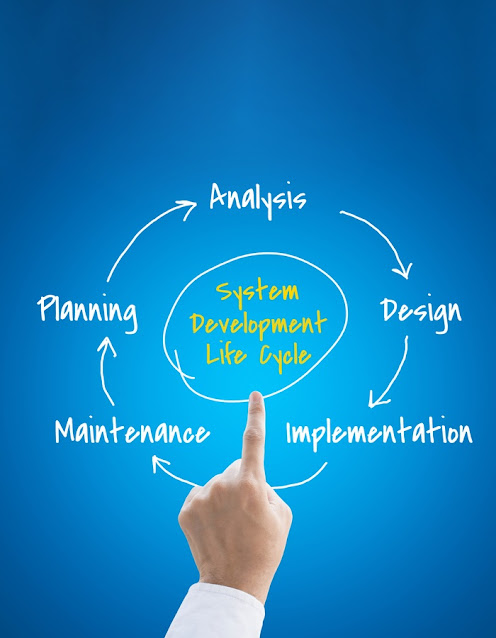
The software development life cycle (SDLC) is the process of developing and maintaining a software product. This process can include multiple stages such as requirements analysis, design, implementation, testing, and deployment.

The SDLC has five phases: analysis phase, requirements phase, design phase, implementation phase, and test phase. Depending on the type of project these phases may not always be necessary or integrated into a single phase. For example, in the case of an incremental release with no maintenance required for a software product these phases may be combined into just one or two phases.

The requirements for custom software development are many. The software must be able to maintain data integrity, be easy to understand and intuitive, provide security, and more.

Custom software development is an exhausting process with long hours. But it is worth it in the end because you get what you want - a custom piece of code that will work exactly how you need it to.

Custom software development is the process of developing or customizing software systems to match the requirements of specific end-users.

The life cycle can be broken down into 4 phases: design, coding, testing, and deployment. For each phase, there are different activities that need to be done.

The design phase is the first part of the software development process where you figure out what needs to be done with your system. You create a conceptual design based on user needs and business requirements.

The coding phase is about turning your design into code that can run on a computer system. This includes writing code for individual modules of your application, connecting different modules together, debugging code errors, and deploying it on a server for use by others or users of your application

Custom software development is the process of developing software that meets the specific needs of a given client.

The life cycle of custom software development can be seen in four stages - Analysis, Design, Development, and Deployment.

Analysis refers to the evaluation of needs and the activities involved in gathering information on these needs. Design is the stage where designing new systems or modifying existing ones are done according to gathered information at the analysis stage. Development is where coding takes place for functionalities described in the design stage. Deployment means the deployment of developed systems or subsystems into the production environment for use by end-users.


Custom Software Development Definition 

Custom software development is the process of creating software that is not off-the-shelf. It can be developed for a specific business need, or to meet the needs of a particular customer.

Custom software development has many advantages over off-the-shelf software. The main advantage is that it can be tailored to suit your specific needs, which means it can be much more efficient and more effective than an off-the-shelf solution.

The initial stage of the custom software development system life cycle is planned. It includes tasks such as establishing Goals and Objectives as well as determining the feasibility of project Goals. The next stage is a design which includes tasks such as designing architecture, writing specifications, creating mockups, developing prototypes, and identifying risks that need to be mitigated. The next stage is coding which includes tasks such as designing code and implementing the design into code.

Custom Software is also known as custom-made or tailor-made software. It is developed to satisfy unique business needs. It is a process of building customized software or bespoke software for digital solutions. Custom Software Development is designing a software application for a specific group of customers within the organization. Such custom software is designed to address their needs precisely as opposed to the more traditional and widespread off-the-shelf software. Such software is typically created just for that specific entity by a third-party by contract or in-house team of developers and is not packaged for reselling.

Custom software development differs from the software packages developed for the mass market, such as existing free software and commercial off-the-shelf software. Unlike traditional software products, custom ones are designed to accurately meet the needs of the target customers or organization requirements.

System Life Cycle 

Custom software must go through a software development process that includes discovery, strategy, design, analysis, development, maintenance, planning, analysis, and Implementation. The best developers use an iterative process to explore ideas, get feedback, and incrementally release new features and functionality. This process can range from a couple of months to years, depending on the size and scope of the software development project. Software development can be a significant investment with lots of risks, so a good process will help mitigate risk and launch a successful product.

If your organization has an in-house IT department with the appropriate capabilities and bandwidth, then you can build the software internally. Otherwise, you’ll need to hire a custom software developer to partner with you to create the custom software project. Also, in many cases, there is a mix of internal and external team members that work together to build good custom software development service outcomes.

Planning and Analysis Creates Good  Custom Software Outcomes


A winning client software project is one that delivers an answer to objectives on time. That needs good design from the beginning of the thought life of the project. Work along with your custom package developer and keep centered on your key objectives. This will make sure that you receive a custom software solution that meets your business wants and provides you with an honest come back on your investment.

Preparing Your Business for AI Bot Development and Deployment

Introduction

Artificial intelligence (AI) and AI bot development are no longer the sole preserve of large corporations and scientists. AI bots are becoming available for businesses of all sizes.
AI is a technology that will transform businesses. To date, we have only seen the tip of the AI iceberg. And, no one is 100% certain of what lies beneath the surface. So, how can you prepare your business for this revolution that is coming soon? How can you prepare for a revolution that will bring changes that no one can predict with any certainty? The answer is; you must begin making cautious and measured preparations now.

Learn About What AI has to Offer Your Business

The first thing you should do to prepare for AI is to get key staff in your business thinking about the technology. AI is an emerging technology. So, avoid any preconceptions that may have about the AI bots and AI bot development. Don’t fall into the trap of thinking that AI bots are only chatbots. Look further afield at what AI may be able to do for your business in the future. Look at how your competitors are implementing AI. Look at how AI is being implemented in businesses outside of your own niche market. Research where AI bots are likely to go next and how to prepare your business for AI Bot development. Here are a few of the business processes that AI bots are already automating:
  • Intruder detection
  • Answering users’ technical questions
  • Automating production management
  • Internal compliance monitoring
  • Anticipating customer purchases
  • Monitoring social media
  • Financial trading
  • Automated call distribution

Understand Your Business Needs

It is important that businesses don’t begin to use AI technology for the sake of having AI. Businesses should use AI bots and define AI Bot development projects to meet a defined business need.
Preparing Your Business for AI Bot Development and Deployment


A support desk that provides award-winning support services, for example, may not need AI bots. In this case, using chatbots to answer support calls might be a backward step for the business.
If a support desk is overrun with calls, though, Chatbots might improve the service. They could reduce waiting times and reduce the number of customer complaints.
The starting point for preparing for AI bots is to understand your business needs. Don’t look for the business processes that AI could fit. Identify the business processes that AI Bots could improve.

Set Realistic Expectations for AI Bot Development Projects

AI is not the solution to everything. Customer service bots are great for very busy call centers. But, if you only receive a few calls a day, AI would not be necessary. AI bots are also useful for data mining. But, if your data set is small, a human would be able to complete the job as fast, because there would be no setup time involved.
Instead of trying to revolutionize your business overnight, start with something small. Start by looking at automating a small task that is currently time-consuming or very expensive to complete and defining an AI Bot development project to achieve that objective. Implementing AI will be a steep learning curve for all businesses. It is better that you learn by first implementing AI to complete a minor task. Then, you can start thinking about AI for mission-critical tasks.

Don’t Forget the Staff

Using AI bots is likely to have a big impact on your staff. It will bring new challenges and staff will need retraining. Staff will also have concerns about job security when you begin to use AI bots. So, it will be important to address the needs of the staff as a part of your AI strategy.
Provide employees with training so that they can work with AI bots. Think ahead about how employees might need to move into new roles. AI is likely to change the roles that people fill rather than replace the need for people. If you want artificial intelligence to deliver results, you will need to train your employees on how to work with and manage AI bots.

Start Preparing Your IT Infrastructure Now

One of the major potentials of AI for businesses is that it can use data from many different sources. This might be combining internal customer data with market research data, for example. Combining data from different systems can be a challenge. Especially if those systems cannot already communicate with each other.
AI bots will be able to perform more than one or two functions in a business. In the future, AI will work across all business systems. The use of AI will impact all areas of a business. Transitioning to AI will be easier if all your systems sit on a common platform. The easier it is for systems to share data, the easier it will be to sit AI bots over the top of all those systems. This is something that businesses can build into their IT strategies now.

Conclusion

AI is something that will need to revisit on a regular basis. You will need to track the progress of your own implementations of AI bots. And, you will need to keep abreast of new developments in AI. AI is with us today, but it’s got a long to go. So, the best way to begin using AI in business is to introduce it in small steps — perhaps starting with a few carefully defined AI Bot development projects. The first step is to start preparing for now.

Natural Language Processing – What it is and why it’s important

Introduction

Natural Language Processing — the application of software systems to examining, interpreting and accurately responding to speech is viewed as the next big leap in user interface technology. However, human speech is far more complex than most people realize. There are rules, such as spelling and grammar. How we interpret speech and text, though, is far less well-defined. How do you know when a person is being sarcastic, for example? How do we know that an athlete’s explosive sprint to the finish line didn’t involve any pyrotechnics? In human language, the words can say one thing, but the context and the tone make those words mean something else.
It takes humans a half a lifetime to learn the subtle nuances of language. Even then, there will be words and phrases that some of us don’t understand. Then, there are further complications in understanding language, such as dialects and colloquialisms. So, how can a computer that “thinks” in binary be programmed, line by line, to become fluent in any language? The answer is; it can’t. But, thanks to the advent of artificial intelligence (AI), a computer can now learn how to understand a language.

What Is Natural Language Processing?

Natural language processing (NLP) is a branch of AI. NLP relates to humans and computers communicating using natural language. NLP includes both speech recognition and reading text. Using machine learning, a computer is now able to learn how to understand our speech and writing. Computers can now look at more than the keywords to decipher our language. It can pick up on the more subtle aspects of our language to interpret the contextual meaning of the words.

Why is Natural Language Processing So Important?

In the past, computers could only work with structured languages. The language had to be precise and unambiguous. To program a computer to perform any task, you had to give it clear instructions. You could only use the limited number of commands that the computer understood. The syntax had to be perfect as well.
Even an end-user of a computer program needs to give the computer precise commands. Those who are old enough will remember that to use a PC you once had to know the common MS-DOS commands. That barrier was overcome, to a degree, with graphical user interfaces, such as Windows. Now, we can point to a file with a mouse, instead of having to know the name of the file.
NLP promises to remove the need for being so precise. Instead of having to learn the computer’s language, the computer will learn how to understand ours. A very basic application of NLP will be how we interface with computers. We won’t have to tell the computer to open our “aprilcashflowforcast.XLS” file. We will be able to ask the computer less precise questions, such as “How much cash have we got coming in this month?”
Natural Language Processing


Practical Business Applications of Natural Language Processing

NLP is not an emerging technology that will, one day, have applications in business. It is a technology that is in use now. NLP is being used in applications such as online searching, and grammar checkers. That’s why you can now search on Google using normal sentences. NLP goes far beyond simplifying the computer/human interface, though. Being able to understand human language has many other practical applications. Here are few examples of how NLP is being used today:

Language Translation

NLP programs learn a language in the same way that humans do. And, like humans, if a machine can learn one language, it can learn many. There are now neural machine translation programs that can translate between languages. The first of these was Microsoft’s Bing Translator.

Chatbots

NLP has made chatbots far more effective. This has increased the applications that chatbots are now used for. In HR applications, for example, chatbots are now answering employees’ questions. There is a chatbot called Talla that will answer questions such as “Do I have any vacation left?”.

Document Reading Tools

NLP is also able to read and interpret the written word. One of the practical uses for this technology is the sifting of job applicants’ resumes. Machine learning allows text reading applications to learn synonyms. This is important when reading a resume because people use different terms to describe their personal qualities and their work history.

Sentiment Analysis

As NLP can understand the nuances of language, it can also understand the sentiment of the words. There is a technology known as opinion mining. This can analyze the opinion that people have of a brand by looking at blogs and social media profiles. It can understand the sentiment of posts and comments left by customers. Analyzing vast amounts of data like this would be an impossible task for a human.

Conclusion

Natural language processing is a major leap forward in AI technology. It removes the communication barrier that has always existed between machines and humans. The potential for the application of NLP in business is immense. A computer could now answer customer queries and take orders. Even if the customer uses obscure language. NLP is likely to remove the need for input devices, such as the keyboard and mouse as well. NLP matters, because it is about to revolutionize the way that we communicate with machines, and how they communicate with us.

Robotic Process Automation and Its Applications

Introduction

Many large enterprises are using robotic process automation (RPA) to reduce costs and improve efficiency. By implementing RPA, businesses can automate repetitive and mundane tasks. RPA could represent the first step towards true intelligent automation. But what is RPA, and what are its applications in business?

What Is Robotic Process Automation?

RPA is a term that can be applied to any computer program that automatically performs a repetitive function. In its simplest form, RPA is the automatic out-of-office message that your email software sends. More sophisticated RPA bots can log into an application, perform tasks, and log out again. RPA is not a part of an organization’s IT infrastructure. RPA sits on top of the infrastructure and automates tasks that humans would otherwise perform.
There are three main types of RPA bots. There are programmable bots that interact with other systems. There are intelligent RPA bots that can make decisions based on unstructured data. And, there are self-learning bots, such as chatbots.
Robotic Process Automation is a software technology that automates the execution of tasks, typically those that are repetitive and mundane.
Robotic Process Automation (RPA) is an emerging trend in business process automation. It is a type of computer programming that uses software to control the execution of routine tasks. RPA automates these routine tasks by mimicking human actions, such as clicking or filling out forms on a screen.

Examples of RPA Applications
RPA is suitable for use on tasks that are repetitive, well-documented, and well-defined. If the task is rule-based, and it does not alter often, then it is a task that could be completed by RPA. Robotic process automation can automate a wide variety of tasks in many different industries. Here are a few of the practical applications of RPA.

Web site scraping

RPA can be used to gather information from web pages. Examples of this include extracting and summarizing data from stock trading websites. Once the data has been collected and summarized, it can then be passed to humans for further analysis.

Automated email processing

Many organizations receive lots of emails asking the same questions. RPA can take care of some of these emails and respond with standard replies. The emails that the RPA bot cannot answer can then be forwarded to the appropriate personnel for answering.

Data Cleansing

Data cleansing is a good example of where RPA can be used to complete time-consuming tasks. If there are clear rules as to what constitutes bad data, RPA can filter out that bad data much more efficiently than humans.

Data Entry

One of the most far-reaching applications of RPA is that of data entry. An RPA bot can read original forms using optical character recognition (OCR) and then “key” the data into an application. This would be faster than a human could key the data, and it would be more accurate.
Robotic Process Automation


The Benefits of Robotic Process Automation

The benefits of RPA to businesses are many. RPA removes the human error factor from many tasks. The effectiveness of RPA can be limited by the accuracy of technologies, though. Technologies such as optical character recognition and speech recognition software. Even so, RPA bots can work 24/7 without breaks, and they never get bored. Bots also only need training once, and they will never quit their job.
RPA technology brings more than only cost savings. It also improves the customer experience through faster processing of data and faster resolution of queries. For employees, it brings that removal of the boring, repetitive tasks, so that they can spend more time on the important aspects of a role. RPA will change the nature of some jobs, so the HR aspects of those changes must be planned for as well. Overall, though, RPA will change the nature of employment for the better, rather than put people out of work.

Why Businesses Need to Consider Robotic Process Automation

RPA is a technology of today, not of the future. RPA bots are being used in accounting, finance, HR, and marketing now. American Express Global Business Travel uses RPA to automate the canceling of airline tickets and the issuing of refunds. At Walmart, RPA bots answer employees’ questions. In the future, some elements of almost every business process could be automated by RPA.
Robotic Process Automation won’t replace the need for humans. But it will remove the need for humans to perform programmable repetitive tasks. Businesses that do not embrace RPA will find themselves falling behind their competition. They will find that their customer service functions are slower and less efficient. And, they will become less competitive because of the additional costs of employing humans to perform tasks that are better performed by boots, and by not innovating by freeing up humans to do things that bots cannot. Eventually, businesses that do not use RPA will also find it difficult to employ people to perform repetitive tasks. Like their customers, their employees will have all moved to the companies that are using Robotic Process Automation to make life better for customers and employees.

Content Marketing to the Small and Medium-sized Businesses

Content marketing has become an extremely important part of many successful marketing strategies, but there are still many small and medium-sized businesses that have yet to realize the full potential of this means of spreading the corporate message. It provides businesses with the opportunity of attracting customers without having to use traditional forms of advertising, but how does it work, and what are the benefits? Here’s a guide to what content marketing is and why it really does matter for SMBs

What is content marketing?

Content marketing can take many forms, but it can be summarized as the distribution of informative, useful and valuable information with the objective of gaining and retaining a targeted audience and, ultimately, driving that audience closer to becoming customers.
It can take the form of an information-based blog, being quoted on industry websites, the publication of white papers, and the publication of informed expert articles on news sites and in magazines or newspapers.
The primary objective of content marketing is to get the name of the business more widely known, but in a form that is informative and helpful, rather than in a form that requires any specific positive action from the reader in return.

What are the benefits of content marketing to SMB?

There are numerous benefits to be gained from a well-planned content marketing campaign that range from improving SEO rankings for the company’s website, to improving the company’s public image. The hidden benefits include increased brand awareness, brand authority, and brand trust.

Content marketing for SEO

Content marketing can have a direct impact on the position that a website achieves on search results. By including important keywords in the text of articles published on a company blog, as well as in articles published on third-party websites that contain links back to the corporate website, content marketing can strengthen and improve the position at which the company’s website appears in the search engine results for those keywords.

Content marketing for brand awareness, authority, and trust

At its basic level, it can be seen as a means of getting a brand better known, but well-written, authoritative content will also create more trust in a brand and infer more authority, and people will always be more likely to buy from a brand that they know and that they trust.

Content marketing Encourages subscription and sharing

A regular flow of high-quality content will encourage the sharing of that content and that will lead to more and more people becoming aware of the brand. If people find the content useful, they are also more likely to subscribe to feeds and email lists, which will open up the opportunity of sending them more traditional direct sales messages as well as future content.

Why Content Marketing Matters

Content marketing is a very effective way of increasing brand awareness and encouraging engagement with a business but producing a regular flow of high quality, informative content is not as simple as it may first appear.
The starting point is to develop a comprehensive outline of the topics to be covered and, for SEO purposes, identify the relevant keywords. This can then be translated into a strategically sequenced editorial calendar.
Producing high-quality content on a regular basis is a time-consuming task and it can be especially challenging for a small and medium-sized business that have limited resources. For many SMBs, outsourcing content creation is likely to be the best option.

However, it is an extremely powerful form of digital marketing that small and medium-sized businesses really can’t afford to ignore if they want to stay ahead of their competition. Content marketing matters as much to SMBs as it does to the major corporations.

Choosing the Right Frontend Framework in 2026: What Engineering Leaders Need to Know

In the last three years alone,  front-end  frameworks have improved more than they did in the entire  previous  decade. Faster compilation t...