Showing posts with label custom software programming. Show all posts

Do software developers code outside of work?

 Software Developer Code

Software developers are often seen as the engine of innovation in the tech industry. They are constantly on the lookout for new and better ways to code, and they spend a lot of their time coding outside of their regular work hours.

Software developers have a passion for coding that often leads them to take up coding projects on their own time. Whether it’s working on a side project or exploring a new language, software developers often find themselves coding outside of work hours to stay up to date with the latest trends in technology.

software developer code


Coding outside of work can also help software developers hone their skills and gain experience in different areas. By taking on additional projects, they can improve their problem-solving skills, sharpen their debugging abilities, and even explore new technologies outside of what they use at work.


It's no secret that software developers spend hours coding during their workday. But do they continue coding after work? Do software developers code outside of work?

The answer is yes! Many software developers find coding to be a passion, and they often spend their free time honing their skills and exploring new technologies. Some may be working on personal projects, while others may participate in open-source projects or collaborate with other developers on innovative ideas.

Coding outside of work can help software developers stay up to date with the latest technologies, stay ahead of the competition, and even gain valuable experience for future job opportunities. So, if you're a software developer looking to increase your knowledge and skillset, it might be worth considering spending some time coding outside of work hours.

Software developers are often seen as highly productive people who work long hours and are dedicated to their craft. But do they actually code outside of work? The answer is yes!

Software developers often take their coding skills and apply them to personal projects or even hobbies. This allows them to stay up-to-date with the latest trends and technologies, while also having a bit of fun. They may even use coding as a way to relax after a long day at the office.

By coding outside of work, software developers can hone their skills and become better programmers. It also enables them to keep up with the ever-changing landscape of technology, which can help them in their professional life.

Software development is a complex process that requires a lot of hard work and dedication. As such, many software developers will code even when they are not at work. This could be for fun or to hone their skills.

Coding outside of work allows custom software developers to stay up to date with the latest technologies and trends in the industry as well as develop new skills and techniques. It also gives them an opportunity to explore new ideas and come up with innovative solutions for problems they might encounter in their day-to-day work.

The amount of coding done outside of work depends on the individual, but it is clear that some software developers are passionate about coding and will continue doing it even if it's not required by their job.


Customer relationship management for Higher Revenues

 In today’s fast-paced, ever-evolving business landscape, remaining complacent is not an option. The more information you have on your audience in the form of customer data, the better equipped you’ll be to beat your competitors and offer better products and services. One of the most valuable types of enterprise data is the relationships and interactions that you have with your customers and prospective customers—a concept summarized as customer relationship management and associated with the snappy acronym “CRM.” So what is CRM exactly and what are the benefits of CRM for your business?

Customer relationship management


What Is Customer Relationship Management (CRM)?

Customer relationship management is a catchall term for the various processes and systems that businesses use to manage their interactions and relationships with their customers and prospects.

Breaking down this term into its three constituent parts, you get:

  • Customers: Your existing user base, as well as any prospects and leads in your sales pipeline.
  • Relationships: The sum total of all your company’s interactions with a customer or lead. This includes many different channels: phone calls, emails, letters, social media, website visits, etc. Sales, marketing and customer support are the three departments most responsible for cultivating customer relationships, but customers may have contact with other parts of your organization as well.
  • Management: The tools, processes, and workflows that help your business stay on top of your customer relationships.

The term “CRM” is also used as shorthand for software platforms and systems that help businesses perform customer relationship management. Examples of popular CRM software include Salesforce, HubSpot CRM, Pipedrive, Zoho CRM, Oracle CRM, and Microsoft Dynamics CRM.

What Are the Benefits of CRM Systems?

By automating and standardizing your customer interactions, CRM systems can offer a great number of benefits to your business. The best systems come with a wide range of features and functionality to support critical business activities such as:

  • Sales enablement: CRM platforms can help your sales team identify the most promising leads and achieve more accurate sales attribution (i.e. determining which content or channels are the most effective at converting prospects).
  • Marketing automation: With the right CRM system, you can automate a large portion of your marketing workflow, from generating new leads to delivering content for different audiences and segments.
  • Data analytics: CRM software can perform analytics and generate reports on the customer interaction data you store. The insights gleaned from these analyses can help you uncover hidden opportunities or identify areas of improvement.
  • Data integration: Some CRM systems can perform customer data integration with other files, databases, and sources. The CRM platform can then serve as a “single source of truth” for your customer data and export it to other systems and locations.

These features and functionality can dramatically enhance your business processes and workflows. The potential improvements offered by CRM software include:

  • A better understanding of your customers: For one, CRM systems help keep track of all your customers’ salient contact data and demographic information: phone numbers, email addresses, job titles, birthdays, etc. CRM data can also offer insights into the behaviors, opinions, and beliefs of your customers and prospects.
  • Improved customer segmentation: As a corollary, understanding your customers better also helps you separate them into valuable segments and audiences for better-targeted marketing.
  • Higher customer retention rates: By keeping track of all customer interactions, CRM software helps you identify and retain disgruntled customers, or help bring back old customers into the fold (e.g. people who haven’t made a purchase recently).

According to a study by McKinsey & Company, businesses that are “intensive users” of customer analytics are more likely to be successful in multiple domains. For example, these businesses are 23 times more likely to excel at acquiring new customers and 19 times more likely to be highly profitable.

How Aezion Can Help with Customer Relationship Management

Customer relationship management is one of the most essential functions of any organization, giving you a window into what your customers think about your business. While off-the-shelf solutions can get you going, many businesses soon find that a more customized CRM or integration with other essential systems is what they need to move their business forward.

Aezion is ready to help. We’re passionate about helping our clients solve their trickiest software development challenges. If you’re in the market for a new CRM solution or exploring how to improve your existing system, we can be with you every step of the way—from roadmaps and strategic planning to development, integration, deployment, and ongoing support and maintenance.

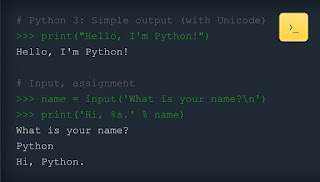
Overview of Python Programming Language

Python can be used to develop a wide variety of applications — ranging from Web, Desktop GUI based programs/applications to science and mathematics programs, and Machine learning and other big data computing systems.

Let’s explore some key aspects of the Python programming language to get a feel for core features and Python’s user-friendly syntax.
                         Python Programming Language Introduction

Python – A Multi-Paradigm Language

Python is a multi-paradigm programming language. Meaning it supports different styles of writing code. One can write Python code in a procedural, object-oriented, functional or imperative manner. For this reason, Python is considered a “swiss army knife” in the developer's toolbox.
As an “object-oriented” programming language, Python supports all the core features of OOP such as abstraction, encapsulation, polymorphism, inheritance, etc. The foundation of OOP is a Class. A class is defined to represent an object that can later be programmatically created and manipulated. The class definition consists of attributes (data) and methods (functions) that collectively define the configuration and behavior of an object.
A Python program consists of a collection of classes representing key elements and their behaviors within a system.

Encapsulation

Encapsulation allows one to hide the internal details or implementation of one object from other objects (s). This protects against accidental or direct access and modifications to the data. Python relies on Encapsulation and other conventions to manage access and usage of class variables or methods. One can restrict access to variables/methods with public, private and protected. A variable or method that is prefixed with double underscore “__“ is treated as private in Python.

Polymorphism

The word “Polymorphism” means many forms. Polymorphism is a feature of OOP that allows one to define multiple forms for a common interface. Python’s implementation of polymorphism is similar to other object-oriented programming languages such as C++, Java or C#. Method overloading and overriding are two different ways with which one can achieve polymorphism in the Python programming language.

Defining a class

A class is defined using a keyword – class. Here’s an example of a student class — consisting of the constructor __init__ — a specific method that gets invoked as part of the object creation.
Python-programming-language-student-class-example
The code snippet above and below are reused from Reference: Python Class – https://pymbook.readthedocs.io/en/latest/classes.html
Notice how the methods are defined using the keyword – def. Notice also, that the ‘print_details’ method takes ‘self’ as a parameter and prints the student name, branch and year.

Inheritance 

Inheritance is a core object-oriented concept in the Python programming language. It allows one to reuse or extend the functionality or features of one or more classes that are “inherited” in a new class. The concept of inheritance in Python is similar to other high-level programming languages such as C#, Java, etc. 
Let’s define a Person class with a method to get the person’s details. 
Python-programming-language-person-class-example
Now, let us revise the “Student” class to inherit from “Person” so it can get all the features of the person. 
Python-programming-language-Student-Class-Inheritance-Example
Once we inherit from the person, the student gets the behavior “get_details”. Notice, however, that the revised Student class overrides the behavior of “get_details” and adds its own functionality.
Note – It’s up to the implementor to decide whether to override a method or not.
This article provides an overview of the Python programming language, its core features, and simple, accessible syntax. Hopefully, this brief introduction provides a glimpse into Python’s simplicity and encourages you to explore it as a potential addition to your programmer's toolbox. 
Aezion Inc. Solution Architects, Engineers, and Custom Software Developers can assist you in exploring Python-based solutions for your Data Science and Machine Learning applications. Contact us to learn more.

Choosing the Right Frontend Framework in 2026: What Engineering Leaders Need to Know

In the last three years alone,  front-end  frameworks have improved more than they did in the entire  previous  decade. Faster compilation t...