How to improve your Custom Software workflow performance

How to improve your Custom Software workflow performance 

Custom software solutions can improve your workflow performance. They have a variety of features that can help you be more productive and reduce the time spent on menial tasks.

Some of the features you should look for when purchasing a software solution are robust data storage, integration with other applications, customizable workflows, and reports.

Custom Software Solutions


Importance of Custom Software

A good workflow is a key to a successful business. It’s an important part of the process that helps you avoid duplicating work and wasting time. But what if your workflow isn’t working for you What if it needs to be customized.

There are a lot of software solutions that are designed to improve workflow performance. Some of them are more effective than others, so it is important to research which ones work the best for the specific needs.

Software solutions can be purchased and installed on one’s personal computer, or they can be accessed through an online service. The following are some examples of custom software solutions that have been designed specifically for writers:

In this article, we will explore how custom software solutions can improve your workflow performance.


Why People Leave Your Website Early

 Why people are leaving your Web site

When people visit your website, they will either leave or stay. It is important to understand the reasons why people are leaving your website and the ways you can improve your site to keep them on it.

Custom web development


Some of the main reasons for people leaving your site include:

- Dislike of design

- Lack of information

- Too many ads

- Slow load time

- Unclear navigation

Website development is a process that can be divided into 4 steps: Planning, Designing, Development, and Maintenance.

The Planning stage includes the process of analyzing the needs of the website and its users. This will help define what features are needed in order to satisfy those needs. The Designing stage will determine how the features should work and what information should be displayed on the website. The Development stage is where all of these ideas translate into a working website, while the Maintenance stage is where any updates or changes to the website are made.

The most important part of a successful website is to make sure that it meets your users’ needs in an efficient way.

Websites are the most important tool for a company to make sure that it can reach its target audience. But what if people leave your website? The answer is simple: they will not be able to find the information they are looking for and will not convert into a customer.

There are many reasons why people leave your website. Some of them include:

- Poor design

- Too many ads

- Slow loading time

- Lack of content

-Your navigation structure is unclear

-Your site isn't responsive  

contact us for creating a responsive custom web development


The Best Mobile Application Development Tools

 Mobile application development tools are a set of software and hardware used in the process of developing mobile applications.

Mobile Application Development


Mobile app development tools can be divided into two categories: cross-platform and native. Cross-platform mobile app development tools are those that allow developers to create apps for multiple platforms without having to learn the languages or use the SDKs for each platform. Native mobile app development tools, on the other hand, are those that require developers to learn the language and SDKs for each platform they want their apps to be compatible with.

The best mobile application development tool is one that has a wide range of features, is easy to use, has a low cost of ownership, and is compatible with multiple platforms.

Mobile application development tools are used to develop mobile applications for Android, iOS, and other platforms.

Some of the best app development tools for mobile include PhoneGap, Xamarin, and React Native. They are mainly used to build cross-platform apps.

The best mobile application development statistics tools are essential for the success of your business. The market is saturated with many different tools and a few of them are really good. Here are some of the most popular ones that you should consider using:

Android Studio, PhoneGap Build, Appcelerator Titanium, AppMakr, React Native

The best mobile application development tools are essential for the success of your business. The market is saturated with many different tools and a few of them are really good. Here are some of the most popular ones that you should consider using: Android Studio, PhoneGap Build, Appcelerator Titanium, AppMakr, React Native.

Contact Us Today!

Aezion Mobile Application Development in Dallas includes IOS, Android, Xamarin, React Native, and Hybrid Apps Development.


Why we should choose a custom software company

Choosing the right custom software company is critical for your business. Unlike off-the-shelf software, which is often outdated by the time it's ready to ship, a custom software company will work with you to understand your needs and deliver a product that will work specifically for you. Look here for more information about integrating software.

custom software company


Custom software development is the process of creating an application, program, or system which meets the specific needs of a particular user. This includes the design and development stages.

A custom software company is a company that has experience in developing customized software solutions for clients. The company will work with the client to understand their needs and goals, and then develop a solution that meets those needs.

The benefits of working with a custom software development company include:

- Access to skilled professionals who can provide expertise in areas that are not part of your core competency - Access to resources that you may not have internally, such as hardware or other specialized equipment - Flexibility in how you use the program. For instance, if your business changes direction or you want to alter how you use yours

custom software company


5 Foundational Aspects of Data Automation

Data automation is a process by which the data within an organization is consolidated, cleansed, and distributed.

Data automation can be applied to different areas of any business. These are often IT Services, IT Services Outsourcing Services, Finance Services, HR Services, and many more.

Such services allow companies to automate tasks that typically require human intervention with the help of technology. Sometimes companies outsource their data jobs to third-party vendors or in-house individuals who specialize in data management.

It's important that before any company embarks on a journey to acquire these services, they know what type of data they need and how it's going to be used for this process. 

Having already explored the characteristics of modern data architecture, it only makes sense that we now dive into the critical aspects of data automation, which goes hand-in-hand with data integration and implementing a successful enterprise data management strategy.

The fact is, businesses are generating and storing an ever-increasing amount of data. On one hand, those huge data stores represent priceless insights that can drive growth. On the other hand, managing all that data often poses so many challenges that businesses end up struggling to access it quickly or consistently enough to actually use it. The technical challenges of handling data are the biggest roadblock to unlocking Business Intelligence (BI).

Data Automation


With data coming in so many different formats from so many sources, achieving efficient, accessible, and cost-effective analytics is no small feat. Data automation plays a big role in the process, as it helps simplify organization, sanitation, access, and reporting in multiple ways. So, let’s explore five critical aspects of understanding and using data automation correctly.

#1 Getting to Know ETL Operations

  • To understand data automation, you first have to know the three main components that make up a data automation tool. These are often summarized as “ETL,” which stands for Extract, Transform, and Load.
  • Extraction is the process of taking data from one or multiple sources.
  • Transformation is the process of modifying data to fit a standard structure, which might require operations like replacing state names with state abbreviations or converting all data into CSV format.
  • Load is the process of moving data from one system to another system.

These key elements make data automation possible by collecting your data, standardizing it, and then shipping it off to the system(s) where you need to have access to it.

#2 Developing a Data Automation Strategy

Failing to create a data automation strategy will cost your company in terms of wasted time and resources. Allowing teams to try to move forward without a strategy to guide them will surely lead them to straying away from the original plans and missing key steps, deadlines, and milestones.

As part of the development of your data automation strategy, you must identify the business areas that stand to benefit the most from automation; sort your data based on its importance and format; prioritize the processes that you plan to automate; and outline the required transformations that must take place for data automation to be effective.

#3 Defining Data Access and Ownership

Defining data access and ownership is yet another crucial aspect of data automation. In practice, there is often not a single team responsible for all data. Instead, separate groups will likely own a set of elements within your ETL process. How you divide ownership will depend on your existing teams and their responsibilities.

One of the most common approaches is centralized data access and operation, where the entire ETL process and any data automation associated with it is owned by the central IT department and likely managed by multiple teams within the department. Another option is hybrid data access and operation, where the extract and transform procedures are each owned by a department and the loading process is part of the central IT department.

Lastly, you might take the approach of completely decentralized data access and operation. In this instance, each department will be in charge of its own set of ETL processes. This is the most complex choice and you need to make sure that each department’s processes don’t contradict that of another department. In other words, investing in company-wide data standardization will prove crucial with this approach.

#4 Measuring Internal Business Results

Three of the biggest benefits a company can expect when implementing data automation is reduced processing time, improved ability to scale, and better performance. Alongside these benefits, you’ll likely experience improved cost efficiency and a myriad of other side advantages that come along with more efficient internal processes. The key is to not only set goals but put someone in charge of monitoring and measuring your progress towards them.

If one goal is to reduce processing time, that means that manual intervention should be minimized and monitored. You should also be tracking metrics like data reliability, resource utilization, and time savings. If another goal is to improve the performance of your data environment, you should be tracking the need for manual task updates, the time it takes to execute jobs, and similar data points.

#5 Ensuring End-User Results

Internal business metrics, like improved performance within your data environment, is no small accomplishment, but the impact of data automation really shines when you’re able to show measurable improvement for your end-users. Data automation can support every team in your company, from customer support to accounting, and improved access to relevant data should directly improve these teams’ ability to satisfy clients.

Aside from tracking how your data automation strategy improves the customer experience, you should also keep in touch with business users to see how it is directly improving their workflows. For instance, data automation reduces human input, thereby improving data quality by reducing human error and manual integrations. This can save teams countless hours spent entering, altering, and updating information within systems, allowing them to focus on what really matters: Growing the business.

Take The Next Step

Aezion has helped countless companies plan a data automation strategy that makes the most of existing tools, talent, and goals. Contact us today to discuss how we can help your organization get on the path to efficiency and performance through a data automation solution.

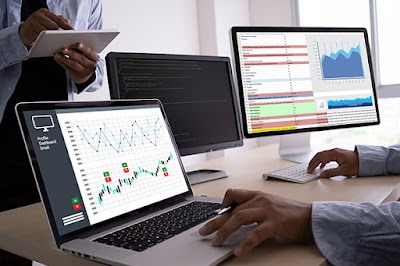
Features of facility management software

Facility Management Software

 Facility management software is a type of software that is specifically designed to help the managers of the facility. It helps them in managing their facility in an efficient manner and helps them with various tasks related to their facility.

The major features of this type of software are:

* Task management

*  Resource management

* Maintenance management

*  Inventory Management

*  Security Management

Facility management software


Facility management software can be an integral part of improving the quality of service by reducing the repeating tasks that are done. This type of software can help managers schedule employees, track work orders, manage assets, and find maintenance records more efficiently. Facility management software can also provide data on energy usage to help businesses make decisions on how to reduce their environmental impact.

Best CSS frameworks for the Responsive site

CSS frameworks for the Responsive Website   

One of the most popular and used web design tools is CSS, which powers the design and layout of a website. CSS frameworks are an important resource for web developers as they can be used to make designing websites easier.

The five best CSS frameworks for 2022 are Bootliquor, The Grid System, UIkit, Foundation, and SemanticUI.

Best CSS frameworks for the Responsive site


Bootliquor: Bootliquor is a lightweight framework that provides tools to create responsive grid layouts and RTL language support for Arabic and Hebrew languages. The Grid System: This framework focuses on making it easier to design websites with templates that can be easily rearranged with drag-and-drop functionality. UIkit: Uikit is another responsive grid system that offers hundreds of pre-made templates as well as the ability

One of the best ways to learn web development is to use a framework. Frameworks make it easy for developers to create and build websites and templates without writing every line of code from scratch.

The following is a list of the best CSS frameworks that we can use in 2022:

1. Bootstrap:

Bootstrap has been the most popular Bootstrap CSS framework for years now and its usage still continues to grow with time. With Bootstrap, developers can design responsive layouts and design interactive pages with ease.

2. Foundation:

The Foundation is another popular CSS framework for web development that has been around since 2009 and it is an open-source project which means you’ll find plenty of tutorials on how to use it online if needed. It offers lots of features such as grid

In this article, we will be listing the top best CSS frameworks.

If you’ve been following the trends in web design, you know that CSS frameworks are a very popular way of speeding up the development process. These frameworks make it easier for designers to make their layouts more responsive and adaptable to any screen size at a very low cost. The best CSS framework for designers depends a lot on what they need and their preferred styles of coding. Here are some of the most popular and widely used CSS frameworks which may be worth looking into:

Bootstrap: The most popular HTML, CSS, and JavaScript framework in the world, with over 18% market share among all such products. It offers a wide variety of features designed to help developers create responsive websites quickly without requiring.

Contact Us Today:

Contact Aezion for best-in-class custom application development and services. Custom software, mobile apps, business intelligence… 100% in-house team!


Choosing the Right Frontend Framework in 2026: What Engineering Leaders Need to Know

In the last three years alone,  front-end  frameworks have improved more than they did in the entire  previous  decade. Faster compilation t...